What happens to the nervous system when you grow up with a chronic illness?
This is a question that is close to my heart because I have lived with Cystic Fibrosis since birth. And while chronic illness is, first and foremost, a physical reality, I have come to understand how living with illness can also shape the nervous system, our relationship with our bodies, our sense of safety, and the way we experience ourselves.
There is a connection that is discussed far too rarely: what does it do to our nervous system when illness, pain, medical procedures, uncertainty, and loss of autonomy are part of our lives – from childhood or even from birth?
This article explores the relationship between chronic illness, the nervous system, medical trauma, and our sense of safety, with a particular focus on people who have lived with chronic illness from an early age.
💡 Trigger warning: This post touches on trauma and illness. Please take gentle care of yourself and only read on if it feels supportive for you today. You can also ask someone you trust to read the blog post with you.
What does it mean to be chronically ill from an early age?
When I talk about chronic illness from an early age, I am mainly referring to conditions that:
- are present from birth and/or genetic
- develop during infancy or early childhood
- require regular medical treatment
- involve invasive medical procedures
- may be life-threatening and/or life-shortening
- shape and accompany a person’s life from the very beginning
There are, of course, many different forms of chronic illness and many different experiences of living with them. Not every person with a chronic illness will experience medical trauma, and not every early-life illness will affect the brain and body in the same way.
But when illness, pain, medical treatment, and uncertainty are repeatedly experienced by a developing child, these experiences can become part of how their nervous system learns about the world and about their own body.
How can chronic illness affect the nervous system?
One way to understand this is through the concept of safety.
A young child’s nervous system does not have the same cognitive understanding or resources as an adult nervous system. It learns through repeated experiences.
If a child’s body repeatedly becomes associated with pain, medical procedures, needles, hospital stays, separation, frightening symptoms, or a lack of control, the nervous system may begin to associate the body and the surrounding world with danger.
The message isn’t necessarily a conscious thought such as, “My body is unsafe.”
It can be something much deeper and more implicit:
“Something can happen to me at any time.”
“I don’t have control over what happens to my body.”
“I need to be prepared.”
“I can’t always trust that I am safe.”
These kinds of implicit experiences can influence our subconscious long after the original circumstances have changed.
The nervous system of babies and young children
As adults, when we experience danger, our fight-or-flight response can activate. We may be able to defend ourselves, run away, set a boundary, or otherwise take action to change the situation.
But an infant or very young child cannot do these things. They cannot fight. They cannot run away.
Their nervous system and their body are still developing, and they are completely dependent on their caregivers for safety, protection, and regulation.
When a very young child is exposed to pain, fear, medical procedures, or other overwhelming experiences, their nervous system may therefore move into freeze, immobility, or dissociation relatively quickly.
In a freeze response, the system essentially reduces movement and engagement as a protective response to something that feels overwhelming or inescapable. Dissociation can create a sense of disconnection from the body, emotions, or immediate experience.
For a baby or young child, this can become an important survival response when there is simply no possibility of fighting, escaping, or changing what is happening.
And when overwhelming experiences happen repeatedly, these early protective responses can become deeply familiar to the developing nervous system.
This is one reason why experiences of illness and medical trauma during early childhood can have such a profound long-term impact.
💡 If you’d like to understand the different nervous-system states and the fight, flight, freeze and shutdown responses in more detail, you can also read my Nervous System Basics article.
Medical trauma and chronic illness
Medical trauma refers to psychological and physiological responses that can arise from frightening, painful, invasive, or overwhelming medical experiences. Anything that for a person was “too much, too fast, and/or too sudden”.
For someone growing up with a chronic illness, medical trauma can take many forms.
It might include:
- painful medical procedures
- repeated treatments, or examinations, potentially including painful measures (like needles)
- long hospital stays
- separation from parents or other attachment figures
- possibly invasive therapy measures
- feeling that your body is an object that needs to be fixed or managed
- having little say in what happens to your body
- frightening and/or life-threatening medical experiences
- having your pain or fear dismissed
- being told that something doesn’t hurt when it does (and other forms of gaslighting)
- learning that expressing distress may not change what happens next
For a child, necessary medical treatment can be overwhelming.
And this is an important distinction: something does not have to be intentionally harmful to be experienced as overwhelming by a nervous system.
Medical care can be necessary, life-saving, and deeply supportive while still being frightening or traumatic for a child (and of course its parents, too!).
The impact of losing autonomy
One aspect that I believe deserves particular attention is autonomy.
Childhood and adolescence are important developmental periods for discovering:
I can do things myself.
I can make choices.
My body belongs to me.
When you live with chronic illness, caregivers and medical professionals may necessarily have to take on a great deal of responsibility. That responsibility is usually protective and essential.
And at the same time, it can conflict with a child’s fundamental developmental need for autonomy.
Repeated experiences of having decisions made about your body, being physically handled, undergoing procedures you cannot refuse, or having your daily life structured around treatment can influence your later sense of agency.
You may grow into an adult who finds it difficult to know what you want, trust your own bodily signals, set boundaries, or feel that you truly have a choice.
What happens to the nervous system in adulthood?
Living with chronic illness from an early age can have long-term effects on the nervous system. This can show up in adulthood in different ways, for example:
- Chronic hypervigilance: constantly watching for what will happen next
- Possible difficulties with self-regulation, especially when the system was unable to learn how to soothe itself due to a possible lack of co-regulation by caregivers
- The nervous system being fundamentally primed for danger
- Difficulty interpreting bodily signals: they may often have been ignored, or this may strongly affect trust in one’s own body
Trusting the body can therefore be much more complicated than simply being told to “listen to your body”.
The movement between fight, flight and freeze
Some people who have lived with chronic illness from an early age recognize a pattern of moving between different nervous-system states.
There may be periods of:
Fight or flight: anxiety, hypervigilance, tension, restlessness, constantly preparing for what might happen next.
And periods of:
Freeze or shutdown: numbness, dissociation, exhaustion, feeling disconnected from the body, or functioning on the outside while feeling absent internally.
Sometimes this can look like what is often described as functional freeze: continuing to work, parent, care for others, and get things done while feeling disconnected from yourself underneath it all.
These responses are protective patterns that can make sense in the context of what the nervous system has experienced.
💡 If you’d like to understand the different nervous-system states and the fight, flight, freeze and shutdown responses in more detail, you can also read my Nervous System Basics article.
The role of co-regulation and emotional support
What can make a profound difference is how a child is supported through these experiences.
If there was space for all of your feelings – for fear, anger, and sadness – and you could speak openly about them, so if you experienced co-regulation and support:
👉 Then the nervous system can develop more healthily, despite everything.
What can intensify overwhelm is when a child is alone with all of this – when support and co-regulation are lacking, when they have to be strong, or when they take on responsibility for their parents‘ wellbeing.
👉 Then the burden becomes far, far too great for a small child.
What about people who develop chronic illness later in life?
Those who become chronically ill later on in life might bring with them an already-developed, potentially more stable nervous system.
That can be a resource.
But you also know a healthy body. You know what it feels like not to be limited. And losing that – adjusting to this new reality – can be profoundly challenging in a different way.
Both paths – becoming ill early in life or later – come with their own challenges.
Why understanding the connection matters
Because it explains why so many everyday things can feel difficult:
- Trusting your own body
- Feeling safe
- Allowing closeness
- Feeling at home within yourself
It is not your fault. It is how your nervous system learned to survive.
And: you can learn to feel safer within yourself again – but in very small steps, with lots of patience and compassion for yourself. 💛
Can the nervous system learn new experiences of safety?
Yes.
A nervous system that was shaped by difficult experiences early in life is not necessarily stuck there forever. Our nervous systems remain capable of learning throughout life.
A nervous system can learn that safety is possible – at its own pace and with the right support.
The first step is always understanding what has happened, and what is happening, in your system. Therefore understanding how our nervous systems work can bring a lot of awareness and understanding.
Body-centered work is then about bringing regulation and capacity back into the system, expanding your window of tolerance, and slowly creating a safe space for what could not be felt at the time – for what might finally be ready to be seen.
Coming home to a body that has been through a lot
For me, this has been one of the most transformative parts of somatic work.
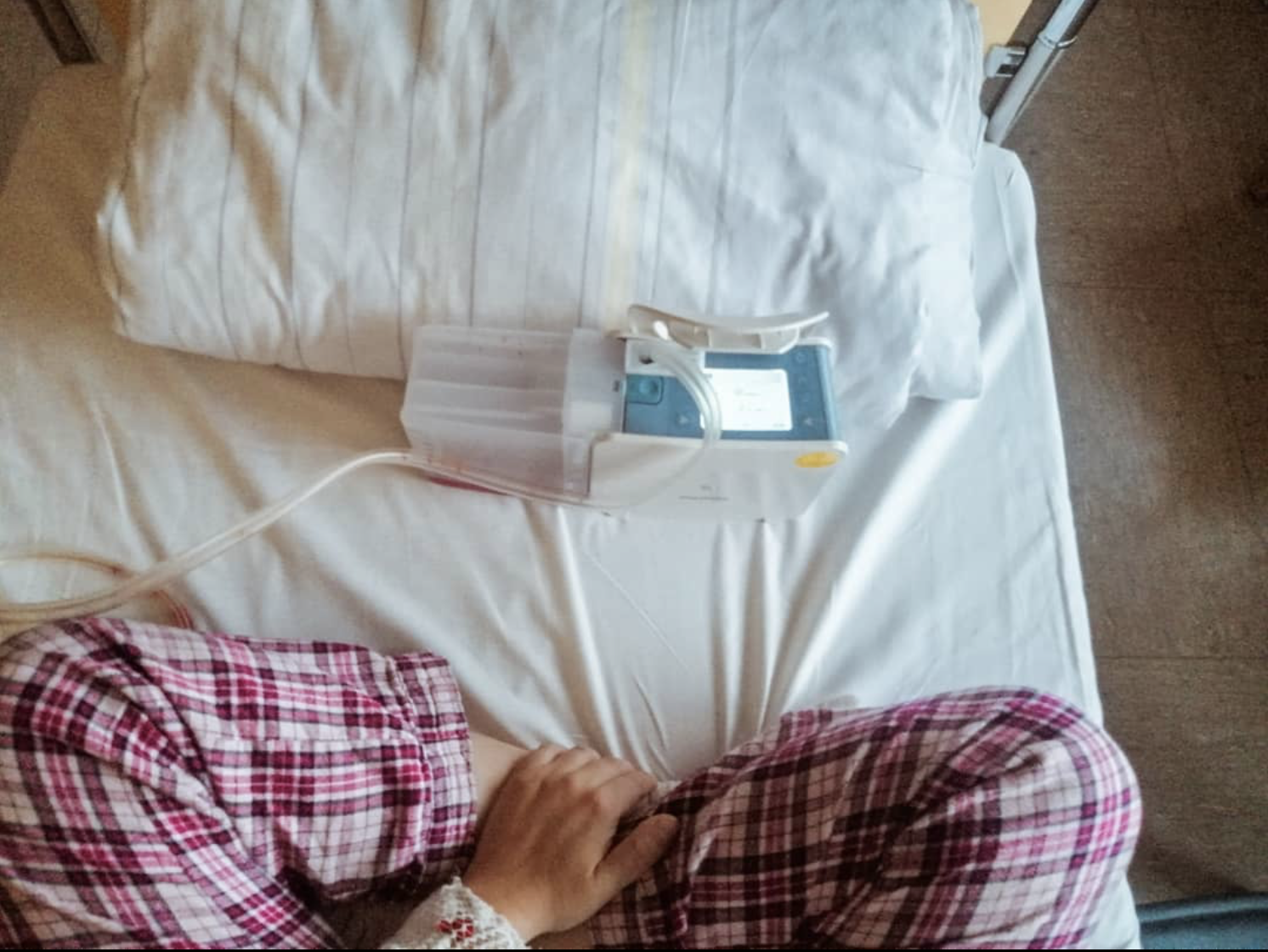
I have lived with Cystic Fibrosis since birth. I know what it means to live with medical interventions, uncertainty, and a body that often doesn’t feel safe.
Understanding how the brain is imprinted by trauma and how the nervous system works, helped so many things make sense for me. I was finally able to see the connections and begin changing my perception of myself, my body’s signals and my behaviors.
This is part of why I now offer trauma-informed somatic guidance for women, including those living with chronic illness. Creating space for what your body has been through, building capacity for what you feel, and finding a way of being with yourself that doesn’t require you to fight your body.
You are not broken, even when it might sometimes feel that way. Your nervous system simply responded exactly as it had to in order to survive.
If you recognize yourself here: you are not alone. And it is possible: you can learn to feel safer within yourself again.
If this speaks to you and you’d like to explore working together, you’re very welcome to contact me or book a free discovery call if you feel like you would benefit from someone walking this path with you.
Important note: Somatic work doesn’t replace psychotherapy. If you are experiencing acute or severe psychological distress, I recommend working with a therapist – alongside or instead of our work together. I’m happy to refer you if needed.

This blog post was written with love for everyone who wants to find their way back to themselves and their essence. Feel free to share it with people you care about who might benefit from it. So glad you’re here. ♥️
More about me: As a trauma-informed somatic coach, I’m here to support you on your path to greater self-connection and realization. With my support I help you get there – body-centered and nervous-system-oriented. Find out more about working with me here.
💡 Want to take this understanding further?
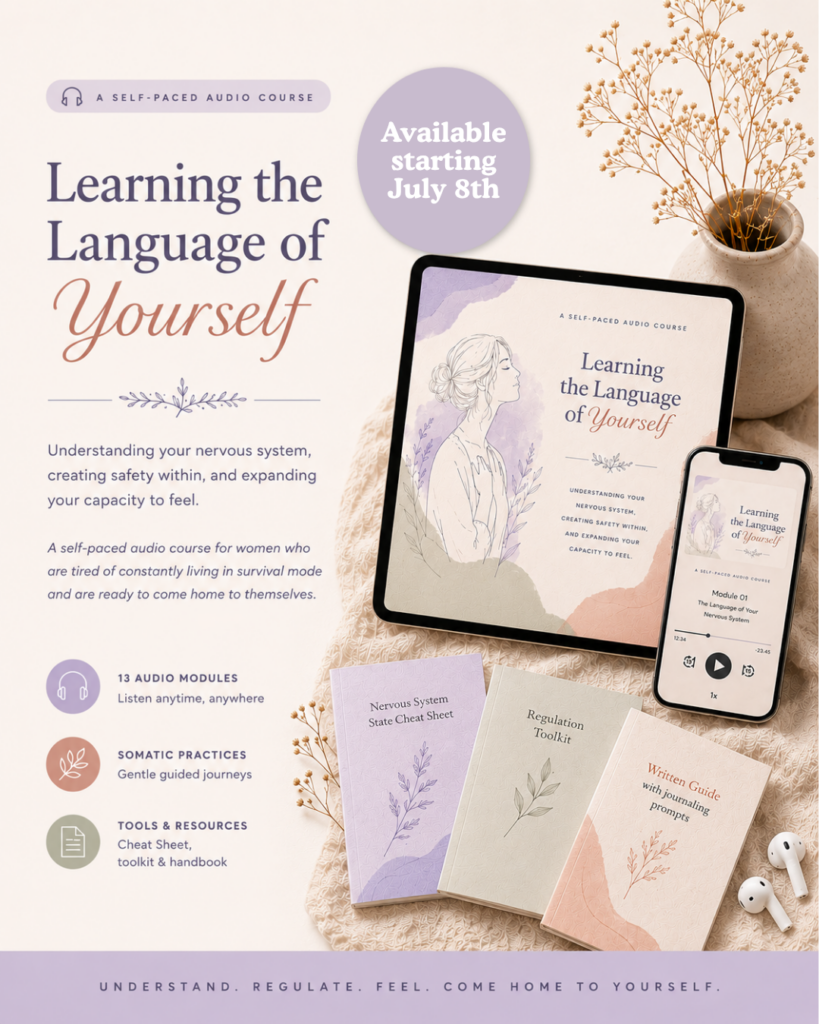
Understanding your nervous system is a powerful first step. My audio course Learning the Language of Yourself offers a gentle introduction to recognizing your nervous system states, understanding what your body is communicating, and beginning to build more capacity.
And if you’re ready for more personalized support, you can also explore my 1:1 trauma-informed somatic coaching here.