
Frequently asked questions
FAQ-section for 1:1 somatic coaching
Answers to many of the questions I hear most often about somatic coaching, nervous system work, trauma-informed support, and what it’s like to work with me.
Questions You Might Be Wondering
#1 Before We Begin
Yes.
The discovery call isn’t about convincing you to work with me. It’s simply a chance for us to meet, talk about what’s bringing you here, and get a sense of whether working together feels like the right fit.
I also know that reaching out can feel vulnerable. My hope is that you’ll leave the conversation feeling more settled, seen, and supported – regardless of whether we decide to work together.
Yes. I work online with women from different parts of the world and offer sessions in both English and German.
In a free discovery call we can talk about potential time differences and what works best for both regarding the scheduling our our sessions.
Both.
I offer online coaching in English and German, and you’re welcome to choose the language that feels most comfortable for you.
#2 Understanding Somatic Coaching
Somatic coaching is a body-based approach to self-awareness, personal growth and creating lasting change from the inside out.
Rather than focusing only on thoughts or behaviors, we also pay attention to what’s happening in your nervous system, your body, your emotions, and your patterns of protection. Often, our bodies tell a story long before we can put it into words.
My work is trauma-informed, which means we move at a pace that supports your nervous system rather than pushing beyond what feels safe or manageable.
Many women have already spent years trying to think differently.
Sometimes insight alone isn’t enough because the nervous system still experiences the world as unsafe.
Somatic coaching doesn’t replace reflection – it expands it by including the body’s experience. Rather than trying to think your way into feeling better, we gently explore what your body is communicating and create opportunities for your nervous system to experience greater safety, flexibility, and capacity.
Part of working with me is also consists of psychoeducation, so learning about the nervous system while working with it. This way you profit even more from this work, because you actually learn more about yourself and your body for the future.
Working in a trauma-informed way means recognising that all of us have experiences that have shaped the way we relate to ourselves, to others and to the world. Experiences that have left an imprint on our nervous system.
Trauma occurs when something was too much, too fast, or too sudden – especially when there was no one there to hold space for us at the time of the event(s).
Attachment and developmental trauma, in particular, are more common than we think. The effects of these early experiences often manifest as chronic exhaustion, hypervigilance, feelings of numbness or disconnection, a tendency to become overwhelmed quickly, intense irritability, and the feeling of never truly being present – signs of a chronically dysregulated nervous system.
In our work together, we don’t push, analyse or overwhelm your system.
We move at a pace that feels manageable for you, creating a space where your body can gradually begin to soften and feel safe enough to explore what wants to be seen.
No.
Many women I work with don’t identify one single traumatic event.
Instead, they describe years of chronic stress, caregiving, perfectionism, people-pleasing or fawning, chronic illness, difficult relationships, getting overwhelmed easily or difficulties in motherhood.
If you have experienced single traumatic events or are aware of such, that is okay, too.
Only, if you are experiencing acute or severe psychological distress, I always recommend working with a licensed therapist alongside or instead of working with me. This is something I assess in a free discovery call.
Generally, no.
My work isn’t about going back into painful memories, reliving past experiences, or intentionally bringing up trauma in order to heal it.
Instead, we focus on what’s happening right here, right now – what you’re noticing in your body, your emotions, your nervous system, and your present-day experience.
Sometimes, as we slow down, an old memory or feeling may naturally arise. If that happens, we don’t force it away, but we also don’t dive into it. We stay anchored in the present, moving at a pace your nervous system can comfortably hold.
The intention is never to overwhelm your system. Instead, we work gently to create more safety, more capacity, and more connection with yourself – in the present.
Not at all.
Most women who come to me, have never before experienced somatic coaching or other body-based approaches. They often approach me because they have noticed that cognitive approaches haven’t been helping them (anymore).
So, whether this is your first experience with body-based work or you’ve explored somatic practices before, you’re welcome exactly as you are.
There’s nothing you need to prepare or know beforehand.
#3 What Working Together Looks Like
Every session is different. Some sessions involve more conversation. Most include guided somatic practices, slowing down, noticing bodily sensations, exploring emotions, or becoming curious about patterns that emerge in the moment. Sometimes we include writing practices like journaling or expressive writing.
There isn’t a rigid agenda. Instead, we follow what feels most supportive for you that day while keeping your intentions in mind.
There’s no fixed formula.
Some sessions naturally involve more talking because your sharing needs space. Others invite us to slow down and notice what your body is communicating beneath the words.
Rather than choosing between conversation and embodiment, we allow each to support the other.
Part of my role is noticing moments of overwhelm or shutting down early enough so that we can slow down, create more safety, and work within what your nervous system can comfortably hold.
This can look like your nervous system moving into a protective shutdown response (this is referred to as the dorsal vagal state). If that happens, I gently support you in reconnecting with your body and finding enough safety and capacity again.
The goal isn’t to push through difficult emotions. It’s to gradually expand your capacity to stay connected to yourself without becoming overwhelmed.
Over time, and only when your nervous system feels resourced enough, we gently practise widening your window of tolerance so that you can stay present with more of your experience while feeling supported.
We work with your nervous system – not against it.
Rather than trying to „break through“ or push for big emotional releases, we focus on creating enough safety for your system to stay engaged without becoming overwhelmed.
Often, slower is actually what allows deeper and more sustainable change.
You’re not alone.
Many women tell me, „I don’t really feel connected to my body,“ or „I don’t know what I’m supposed to notice.“
That isn’t a problem or a sign that you’re doing something wrong. Often, it’s simply how a nervous system has learned to protect itself.
We begin exactly where you are, without pressure or expectation. Body awareness develops gradually, and there is no „right“ way to experience it.
Sometimes – but not always.
If it feels supportive, I’ll suggest simple practices, reflections, or ways of bringing more awareness into your everyday life.
The intention is never to give you another long to-do list. Any practices are meant to support integration and fit into your life, not become another source of pressure.
This is something I care deeply about.
Many of the women I work with are already carrying enormous pressure to “do everything right.“
Our work isn’t about becoming the perfect client or completing every practice. It’s about learning a different relationship with yourself – one that includes curiosity, self-compassion, and enough spaciousness to meet yourself exactly where you are.
Healing isn’t another performance.
#4 Who I Work With
Yes.
I’m a mother myself, and motherhood has profoundly shaped both my personal journey and the way I work.
Many of the women I support are mothers navigating chronic overwhelm, identity shifts, sensory overload, or simply the feeling that they’ve lost connection with themselves.
You won’t need to explain why motherhood can feel both deeply meaningful and incredibly demanding.
Actually, yes, I do.
I mainly work with women and I cherish doing so. But I also love working with men.
I believe that there is so much potential in coming into the body and working on a somatic level – no matter which gender.
So, in the end, the gender doesn’t matter too much. We can all learn to tend to our nervous systems and feel safe in ourselves again. And that is something that will have an effect on our environment and the ones closest to us, too.
Absolutely.
Living with Cystic Fibrosis has deeply shaped both my life and my work. I know what it’s like to live in a body that asks for more care, more flexibility, and more compassion than the world often expects.
While every person’s experience is unique, I understand that chronic illness affects far more than physical health. It can influence your nervous system, your relationships, your identity, and the way you move through everyday life.
Many of the women I work with have.
They’ve read the books, listened to the podcasts, tried mindset work, or spent years understanding themselves intellectually. And while those experiences have often been valuable, something still doesn’t quite feel different in everyday life.
That’s often because insight alone doesn’t always create change. Our nervous systems also need opportunities to experience safety, connection, and new patterns – not just understand them.
My work isn’t about replacing everything you’ve already done. It’s about bringing your body into the conversation so that understanding can become lived experience.
#5 Coaching & Therapy
Somatic coaching isn’t therapy, and it doesn’t diagnose or treat mental health conditions.
If you’re experiencing symptoms that require clinical care, or if therapy feels like the more appropriate level of support, I’ll always encourage that.
For many people, therapy and somatic coaching complement one another beautifully. Therapy may offer clinical assessment and treatment, while somatic coaching provides space to deepen body awareness, build nervous system capacity, and integrate what you’re learning into everyday life.
Some clients choose to work with both at the same time.
#6 Coaching Journeys
I currently work with clients through a personalized 3-month container designed to create the space, continuity and depth that meaningful somatic work needs.
Meaningful change usually doesn’t happen in a single conversation.
Working together over a period of time allows us to build trust, move at a pace your nervous system can truly integrate, and create lasting change rather than temporary relief.
A coaching container gives us the time and consistency needed for deeper, more sustainable transformation.
I offer a free, no-strings-attached discovery call where we can get to know each other, talk about where you are right now, and explore whether working together feels like the right next step.
Progress doesn’t look like suddenly feeling calm or ‚happy‘ all the time. That’s generally not the goal, either.
More often, progress looks like:
- noticing your needs sooner
- recovering more quickly after stressful moments and overwhelm
- feeling less reactive
- having more capacity in parenting, relationships, and everyday life
- feeling more connected to your body
- responding with greater self-compassion instead of self-criticism
- discovering moments of ease that gradually become more frequent
- feeling more deeply connected to what you want and need
This work isn’t about becoming a different person.
It’s about coming home to yourself.
That depends.
Some women feel that their coaching journey is enough and leave with a deeper understanding of themselves, practical tools, and a stronger connection with themselves.
Others choose to continue because they want ongoing support as they integrate what they’ve learned or move into a new season of life.
Towards the end of our work together, we’ll reflect on where you are, what has shifted, and what feels most supportive for you going forward. That might mean another coaching journey, booking ongoing single sessions, joining one of my group offerings or membership (once available), exploring my audio course, or simply continuing on your own.
There is never any expectation to continue. My hope is that you’ll leave with a stronger sense of agency, trust in yourself, and the feeling that you have somewhere to return if and when you need it.

An Invitation
If something in these words resonates with you, I’d love to meet you.
I offer a free, no-obligation discovery call where we can get to know each other, talk about where you are right now, and explore whether working together feels like the right next step.
Looking for a different kind of support?
There's no single path back to yourself.
That’s why I offer different ways to support you, depending on where you are and what feels right in this season of your life:
🌿 Learning the Language of Yourself
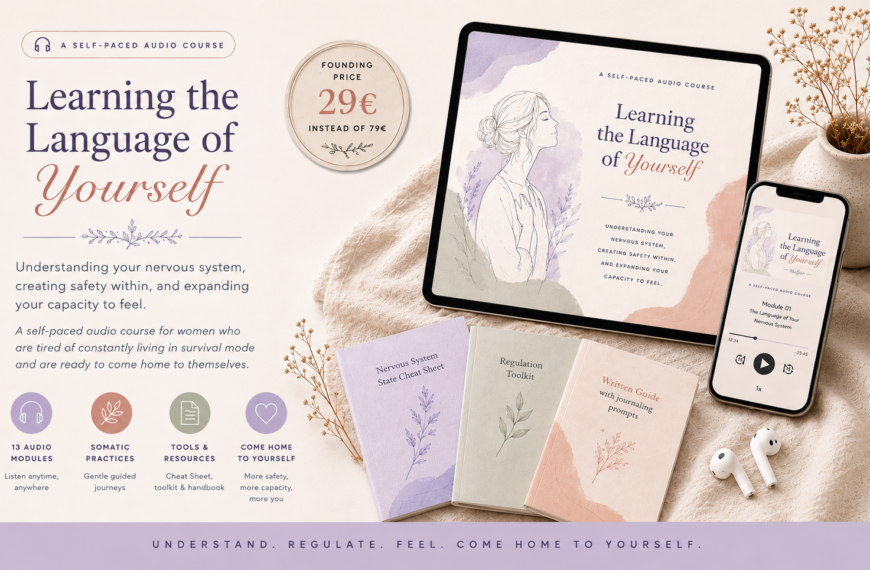
A self-paced audio course that helps you understand your nervous system, create more inner safety and begin speaking the language of your body.
🌿 Women's Circles & Workshops
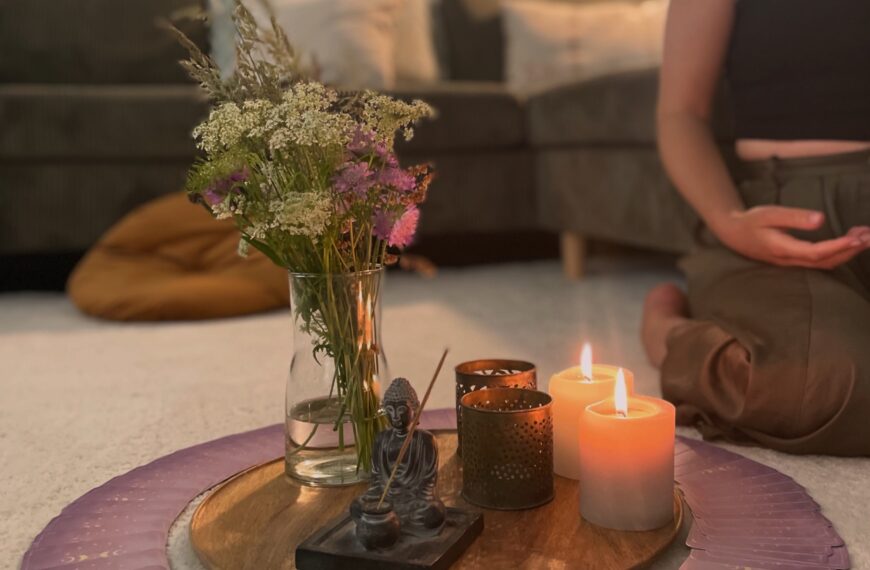
If you’re longing for connection and shared experiences, my circles and workshops offer a gentle space to explore these topics together.
🌿 Soma Circle Membership
For women who’d like ongoing support, practical resources and a community to return to each month. You can sign up to join my waitlist.